What blasting actually does for your logs
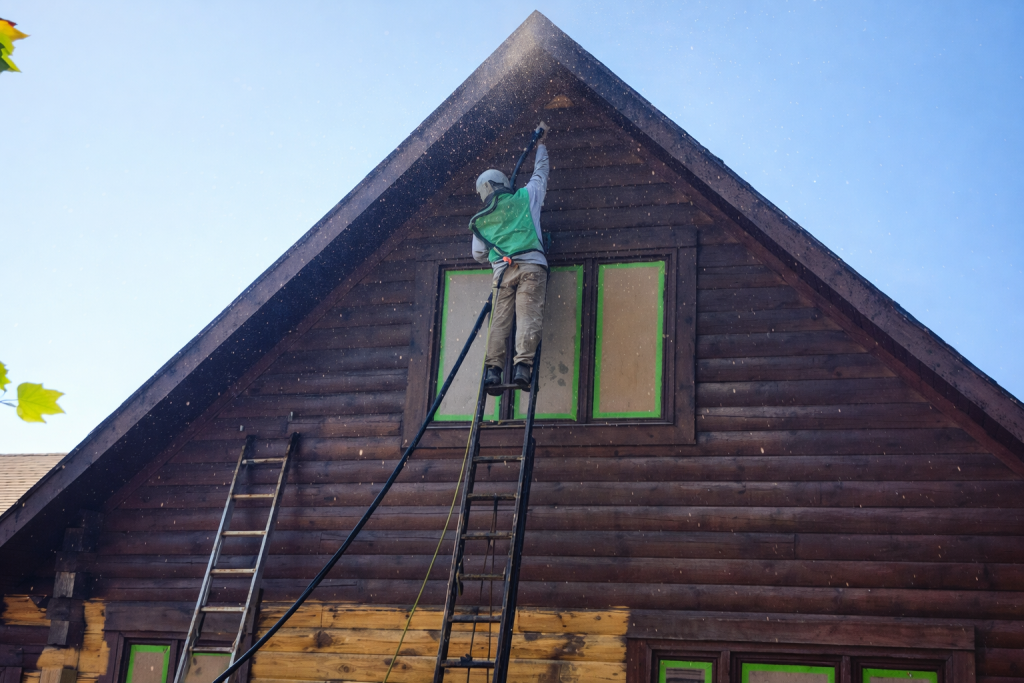
Media blasting is the single most important step in a proper log-home restoration because it removes the old, solid stain or film that traps moisture and accelerates rot. Pressure washing and soft washing often leave a film behind that hides or causes internal decay; blasting removes that film and returns the wood to a breathable surface so penetrating finishes can do their job. In our experience at Log & Timber Worx, homeowners who skip blasting end up paying more in repairs over the next 3–5 years.
What is media blasting? (simple explanation)
Media blasting uses a controlled stream of an abrasive media (chosen for the species and condition of the wood) to remove coatings, solid stains, and contaminants down to clean, bare wood — without over-aggressive sanding. The goal is to restore a breathable surface so finishes like Perma-Chink Lifeline can penetrate and protect the log instead of trapping moisture behind a film.
Why blasting is essential for log-home health
- Removes moisture-trapping films. Solid stains and film finishes form a seal that prevents natural drying, encouraging fungal growth and soft spots. Blasting removes that film completely — pressure washing often cannot.
- Reveals hidden damage. Blasting exposes rot, insect damage, and soft spots so repairs happen where they’re actually needed.
- Prepares wood for breathable finishes. After blasting, penetrative systems such as Perma-Chink Lifeline bond correctly and protect long term.
- Extends the life of the envelope. A properly blasted and finished envelope breathes and performs; skipping blasting creates recurring maintenance and repair costs.
Pressure washing vs media blasting — what most homeowners don’t see
Pressure washing can remove dirt and loose material, but it typically leaves a film of old stain or paint that still traps moisture. Media blasting removes that film and leaves a textured, clean surface that breathes and bonds with penetrating finishes. In short: pressure washing may improve appearance temporarily; blasting prepares the structure for a true restoration.
Our media-blasting process (step-by-step)
1. Pre-assessment
- Inspect every elevation and identify rot, insect damage, or structural concerns.
- Quotes include scope, timeline, and — when appropriate — the first year of our Log Home Maintenance Plan.
2. Containment & protection
We seal doors, vents and openings, install dust containment and ground protection, and discuss interior protection options with the homeowner. Proper containment protects interiors and neighboring areas.
3. Homeowner presence & color confirmation
We strongly recommend the homeowner be present the first day to confirm color choices and containment. Presence on day one helps prevent surprises and speeds decisions if interior contamination occurs.
4. Media blasting
We select media and settings that remove the film with the least wood loss. Experienced technicians control pressure, angle, and distance to preserve log profiles and corners while achieving a clean, breathable surface.
5. Cleanup & inspection
We remove spent media and dust, inspect logs for repairs, and document conditions with CompanyCam photo timelines so you can see exactly what we found and did.
6. Repair & finish
Perform rot repair or replacement where needed, chinking/caulking, and apply breathable penetrating finish systems (we commonly use Perma-Chink Lifeline and compatible topcoats).
Safety, containment & homeowner options (what to plan for)
- Interior protection: If media could get inside, homeowners can (a) be on site to manage decisions, (b) authorize protective plastic sheeting for an added fee, or (c) contract us for a post-blast interior cleaning.
- Environmental protocols: We choose appropriate media and follow disposal rules; suspect coatings are tested and handled accordingly.
- Minimal wood loss: We tune media and pressure to remove films while protecting log corners and detail.
What homeowners should expect on restoration day
- First day: Containment, color confirmation and start of blasting — this is the day we want you there.
- Length: Full exterior blasting typically takes 2–5 days depending on size and access; small areas are faster.
- Noise & access: Blasting is noisy and requires equipment staging; we coordinate access and timing with you.
- Follow-up: After blasting we inspect, repair, and then finish according to the restoration schedule and payment milestones.
When media blasting may NOT be the right first step
- Severe structural rot: If logs are structurally compromised, repairs or partial replacement must come first.
- Historic or delicate finishes: Antique finishes may need gentler methods and test-blasting.
- Unmanageable interior contamination risk: If infiltration can’t be managed, we offer alternatives and protective packages.
FAQs
Is media blasting safe for my logs?
Yes — when done by experienced crews. We select media and pressure to remove coatings while preserving the log profile.
Sales line: “We always test and tune the blast so your logs lose the film — not the wood.”
Will blasting remove all the stain and discoloration permanently?
Blasting removes the film and surface discoloration; a proper breathable finish system applied afterward is required to maintain color and protection.
Sales line: “Blasting is step one; the finish we apply afterward is what keeps it that way.”
Is blasting messy? Will dust get inside?
Blasting creates dust, which is why we contain the site and recommend homeowner presence on day one to confirm protections. If media gets inside, we handle options like protective sheeting or post-blast cleaning.
Do you provide a maintenance plan after restoration?
Many Log & Timber Worx restoration quotes include the first year of our Log Home Maintenance Plan — a protective program that keeps your restored envelope performing. We explain the plan during the estimate.
Ready to protect your log home the right way?
Media blasting is the technical step that separates a short-term tidy job from a real restoration. If your home has had multiple coatings, is holding moisture, or you’re unsure if a pressure wash is enough, start with an assessment.