Breathable Finishes & Color: A Practical Guide for Log Homes
The right finish protects a log home — the wrong finish can hide problems. This guide explains why breathable, penetrating finish systems are generally the best choice for log and timber structures, how professionals evaluate and prepare the surface, and how color and sheen affect long-term performance. It’s intended as an overview of best practices and expectations for professional work — not a DIY manual.
This guide covers surface preparation, finish selection, professional application standards, color testing, maintenance, and common problems professionals prevent. Use it to understand what quality work looks like and what to expect from an experienced applicator.
What is a “breathable” (penetrating) finish — and why it matters
A breathable (penetrating) finish soaks into the wood and allows moisture vapor to pass through the surface. For log homes, this is essential because wood naturally exchanges moisture with its surroundings. Film-forming paints and solid stains can trap moisture and accelerate hidden decay. For long-term envelope health, prefer a system that protects while allowing the wood to breathe.
Surface preparation — what professionals make sure is handled correctly
• Verify coating condition and whether full film removal is required.
• Identify and repair decay, insect damage, and compromised joinery before finishing.
• Confirm the substrate is clean and moisture-stable; correct flashing and drainage issues first.
• Perform manufacturer-recommended adhesion and compatibility checks on representative elevations.
Homeowners should expect applicators to document preparation steps and explain why each one is required for a durable finish.
What to look for in a breathable finish system
• Penetration depth — products that soak into the wood rather than form a surface film.
• Vapor permeability — rated to allow moisture vapor transmission.
• UV resistance — pigmented options or compatible topcoats that reduce fading without blocking breathability.
• Clear manufacturer guidance on prep, coverage and recoat intervals.
• Compatibility between base and any topcoat to preserve breathability.
Professional application standards — what to expect from an experienced crew
• Surface readiness confirmation: crews verify wood condition and moisture levels before starting.
• System selection based on species, exposure and manufacturer instructions.
• Controlled application and quality checks throughout the job.
• Compliance with recommended temperature, humidity and coverage windows.
• Protection of adjacent materials and documented cleanup and final inspection.
These are quality marks you should see described in a proposal or final report.
Color & sheen — professional testing and considerations
Color choice affects appearance and weathering. Professionals coordinate full-size mockups on multiple elevations so colors can be evaluated in sun and shade. Consider exposure, adjacent materials and how colors evolve over seasons. Low-sheen topcoats are often recommended to maintain a natural look while providing protection. Request test patches and documented evaluation before committing to a color.
Common problems professionals prevent
• Coating over a non-breathable film — professionals remove films rather than coat over them.
• Incompatible topcoats — experienced applicators only use clear coats approved for the base system.
• Neglected flashings and poor grading — finishes don’t fix water-entry problems.
• Insufficient testing — pros perform adhesion and color tests on representative areas.
• Rushed recoats or finishing on damp wood — professionals follow moisture thresholds to avoid failure.
Maintenance & evaluation — what qualified service should provide
Rather than DIY schedules, arrange for periodic professional evaluations and documented maintenance:
• Annual professional inspection — identify wear, end-grain darkening, or UV breakdown early.
• Targeted professional touch-ups — controlled spot repairs prolong finish life.
• Coordinated recoat planning — applicators advise full-recoat timing based on observed performance.
• A maintained record of service and photos supports long-term performance and warranties.
Safety, containment & environmental considerations
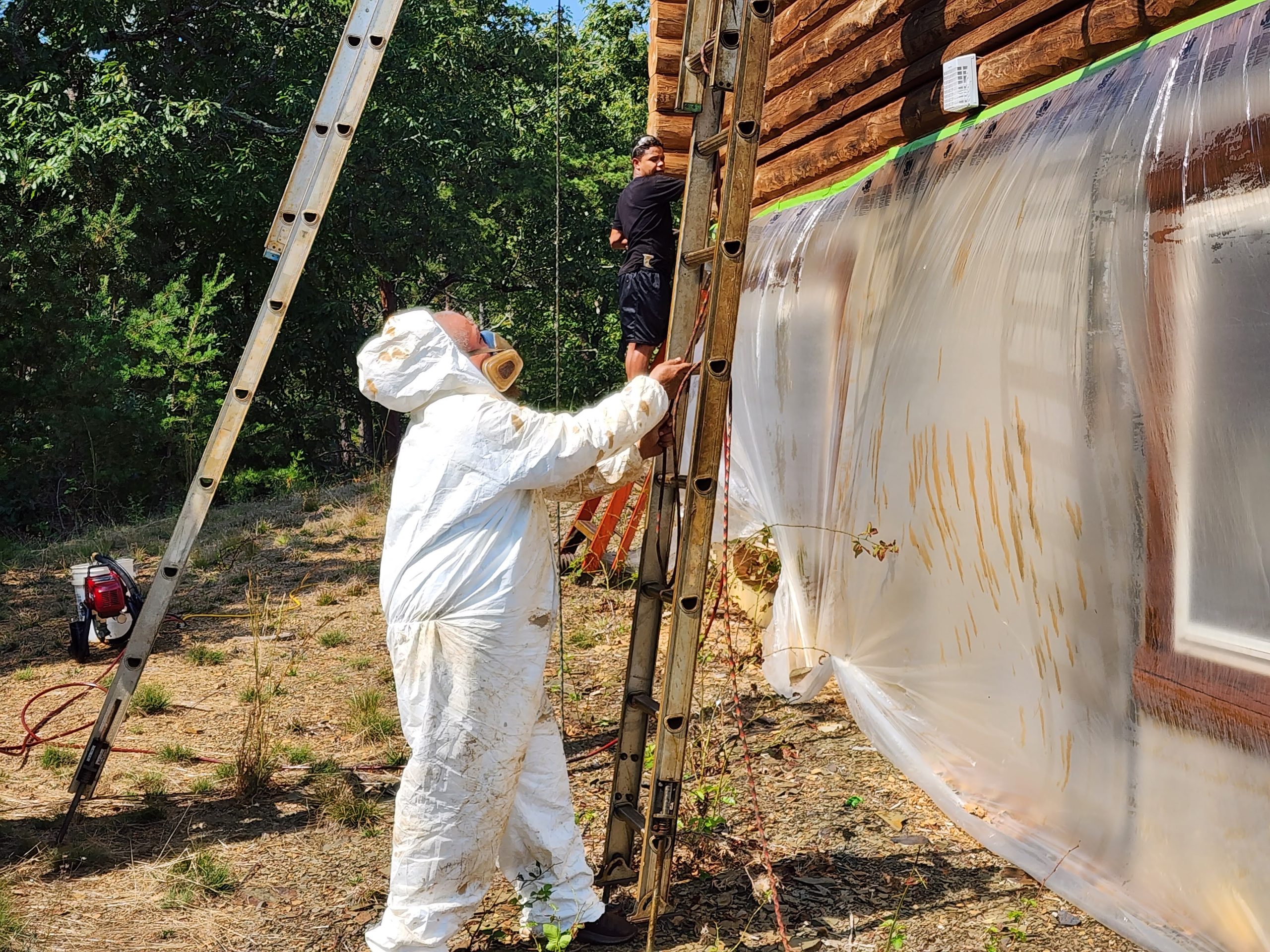
• PPE for applicators: respirators, gloves and eye protection.
• Containment plans to protect plants, water features and interiors from overspray or dust.
• Proper disposal of rags and waste consistent with local rules.
• Testing and specialist handling for suspect hazardous old coatings.
Frequently asked questions
What’s the difference between a penetrating stain and a solid stain?
Penetrating stains soak into the wood and allow moisture vapor to pass; solid stains and paints form a film on the surface and can trap moisture, increasing the risk of hidden decay on logs. Penetrating systems protect while allowing breathability.
Do I always need to remove the old finish before staining?
If the existing coating is a film-forming product or poorly adhered, professional removal is typically required so a breathable system can penetrate. This assessment and removal should be conducted by experienced technicians to evaluate adhesion, substrate condition and containment needs.
How do I pick the right color?
Use full-size test patches in sun and shade, photograph them at different times of day, and consider exposure and adjacent materials. Professional applicators will coordinate test applications so you can evaluate real outcomes before committing.
Ready to book a visit?
Schedule a site visit or consultation — we’ll evaluate the finish, discuss options, and document a clear plan for preparation and application.