Silent Decay, Clear Solutions
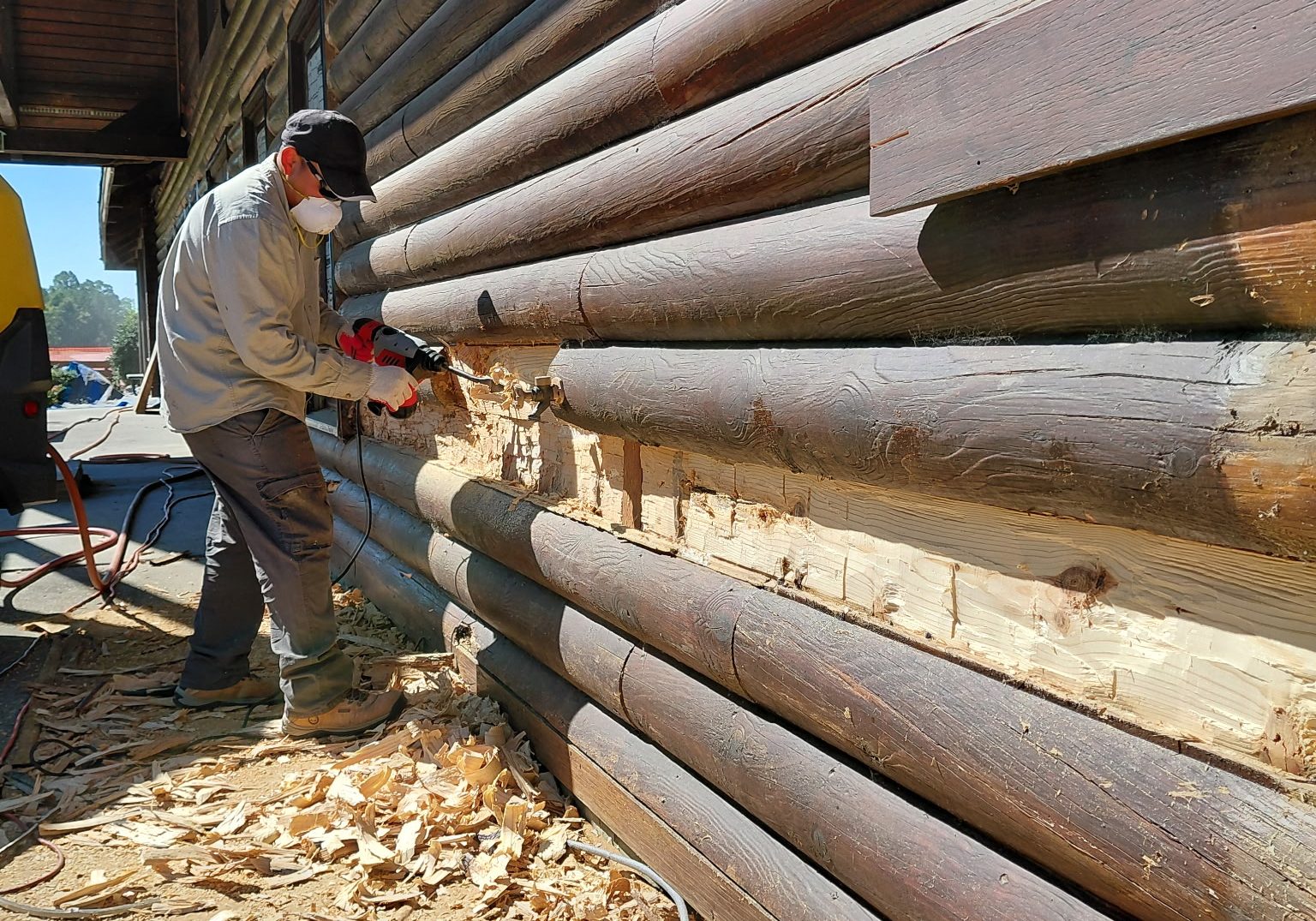
Rot and structural damage threaten the safety and value of a log home. At Log & Timber Worx we diagnose the root cause, preserve as much original material as possible, and rebuild structural integrity with proven techniques. Our work is photo-documented with CompanyCam, and we always deliver a clear plan focused on permanence and long-term protection.
Log home rot repair protects the value of your home. Early, targeted repairs stop decay before it becomes a structural replacement — we document the condition, perform precise splices or replacements, and prevent recurrence.
What is log rot — and why you should act early
“Rot” is decay in wood caused by fungi that feed on damp, poorly ventilated timber. Left unchecked, rot weakens framing, spreads from end-grain and checks, and eventually compromises structural members. Early detection lets us make targeted repairs; delay turns a repair into a full replacement.
Common causes & warning signs
• Trapped moisture under solid stains or film coatings
• Poor flashing and roof-to-wall junctions that funnel water into the log ends.
• Ground grade and drainage that directs water toward the sill or splash zone.
• Failed chinking/caulking that allows repeated wetting cycles.
• Insect activity or wood boring that creates pathways for moisture.
• Visible soft spots, sagging, powdery wood, or interior stains and odors.
How we diagnose rot — thorough, measured, and documented
A good repair starts with a good diagnosis. We combine:
• Visual inspection of elevations, end grain and checks;
• Moisture metering in suspect areas;
• Probing and selective removals to reveal hidden decay;
• Photo documentation with CompanyCam timelines so every decision is clear; and
• Structural assessment to determine if the member is load-bearing and how the repair will affect the system.
Repair options — from patching to full structural replacement
• Surface patching & consolidation. For shallow decay, we remove loose material, treat the remaining wood, apply epoxy consolidants where appropriate, and rebuild the original surface profile.
• Splice & scarf repairs. New timber is spliced into damaged areas to restore strength while preserving adjacent original material—ideal when failure is limited to a single section.
• Partial member replacement. When decay extends deeper into a structural element, we remove the affected portion and replace it with properly fitted, species-matched timber.
• Full member replacement & structural remediation. For safety-critical failures, entire beams, sills, or posts are replaced, with connections and flashing upgraded as needed to prevent recurrence.
• Preventive envelope work. Rot repair is often paired with flashing improvements, drainage corrections, chinking or caulking replacement, and finish restoration to ensure long-term durability.
Our rot-repair process — measured and trackable
1. Emergency stabilization (if needed)
If a structural member is unsafe we install temporary shoring or supports to protect occupants and allow safe access for repair.
2. Targeted demo & assessment
We remove only the decayed material needed to reach sound wood, documenting the condition and the hidden extent of damage with photos.
3. Repair or replace with like materials
Using species-matched timber and proven joinery, we splice, scarf, or replace members and rebuild profiles so structural and aesthetic continuity is restored.
4. Waterproofing & flashing upgrades
We correct flashing, roof details, and drainage to stop water ingress. This step is critical to prevent repeat failures.
5. Finish & protection
After repairs we prepare surfaces and apply breathable finishes (we commonly use Perma-Chink Lifeline systems) and detail chinking/caulk as needed to restore the protective envelope.
6. Documentation & follow-up
You’ll receive a CompanyCam timeline and a written report describing work done, parts replaced, and recommended next steps — including maintenance plan enrollment if desired.
Frequently asked questions about rot repair
How long does a typical repair take?
Repair timelines vary with severity and access. Small splices or surface repairs can be completed in a day or two; larger structural replacements and associated flashing/finish work typically take several days to a few weeks depending on permit cycles and drying windows.
Will you replace the entire log or just the damaged section?
We match species, profile, and joinery to maintain visual continuity. New wood will patina over time; we can apply finishes to harmonize appearance while ensuring breathability.
Can you guarantee rot won’t come back?
We guarantee the workmanship. To prevent recurrence we address root causes—flashing, drainage, and finishes—and recommend a maintenance plan. Because moisture is the underlying driver, addressing envelope performance is key to long-term success.
Do you handle interior structural repairs too?
Yes. We repair interior load-bearing members, sills, and posts as needed, coordinating with mechanical and finish trades when interior access or cosmetic work is required.
Need a rot repair assessment?
If you suspect rot or have a structural concern, schedule an assessment and we’ll diagnose the issue with moisture readings, photos, and a clear repair plan. We prioritize safety and long-term protection.